
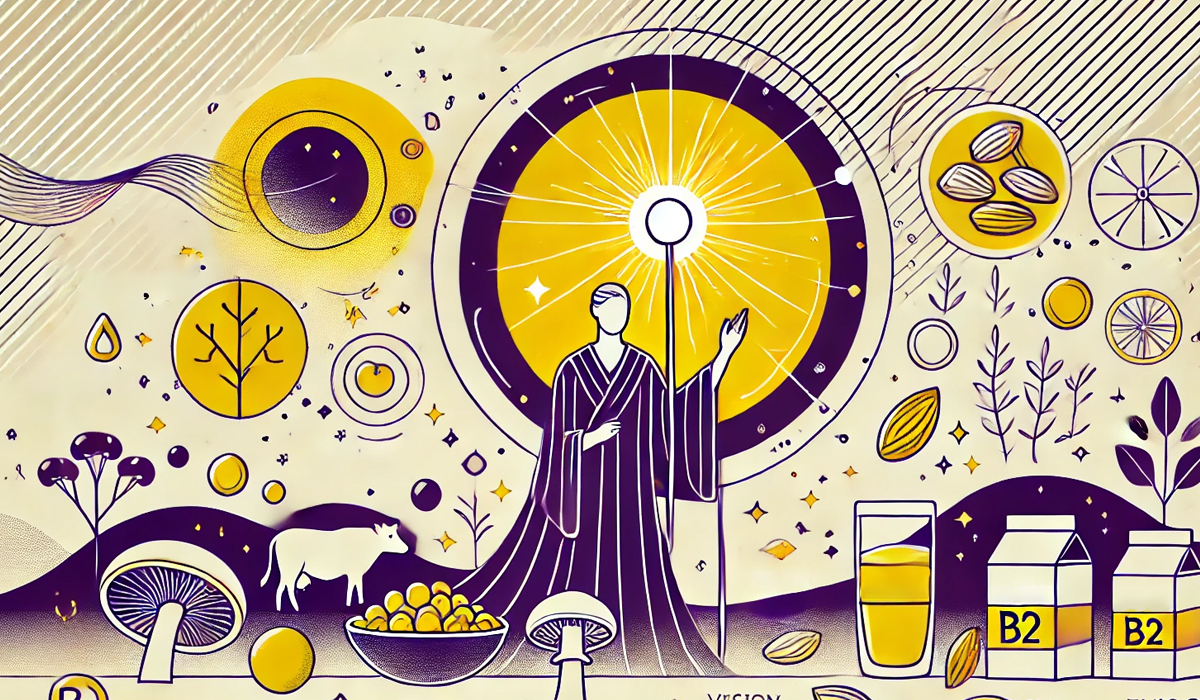
Introduction: Riboflavin, the Glowing Dynamo
Meet Vitamin B2, aka riboflavin—the neon-bright spark of the B-vitamin posse, lighting up energy, eyes, and that radiant glow. From glowing mushrooms to lab triumphs, this water-soluble dazzler has fueled life and fought cracks since the dawn of nutrition. Ready for a tale of fluorescence, flavor, and fierceness? Let’s shine a light on B2!
1. The Chemistry of Riboflavin: The Fluorescent Fuel
Riboflavin (C₁₇H₂₀N₄O₆) is a water-soluble B-vitamin with a yellow-green glow—yep, it fluoresces under UV light like a rave stick. It morphs into FMN (flavin mononucleotide) and FAD (flavin adenine dinucleotide), coenzymes that rev up energy by shuttling electrons through carbs, fats, and proteins. It’s a cell’s glow plug, sparking ATP and shielding against oxidative stress. Fun fact: your pee turns neon yellow with excess—B2’s calling card!
2. The Crack-Curing Chronicle of Riboflavin
Rewind to the early 1900s: kids with cracked lips and sore tongues baffled docs. In 1933, riboflavin was nabbed from milk by Otto Warburg (yep, Nobel guy), linking it to energy enzymes. Earlier, “cheilosis” (lip splits) plagued poor diets—B2-rich foods like eggs flipped the script. By the ‘40s, fortified flour stamped out deficiency in war-torn lands. Bonus: its glow helped chemists spot it—science’s own treasure hunt.
3. Riboflavin Treasure Trove: Everyday Foods
B2’s scattered across your plate:
-
- Dairy: Milk (0.5 mg per cup), yogurt, cheese—creamy champs.
- Meats: Liver (3 mg per 3 oz), pork—organ royalty.
- Eggs: 0.3 mg each—sunny-side B2.
- Greens: Spinach, broccoli (0.2 mg per cup)—leafy glow.
- Grains: Fortified cereals, oats (0.5–1 mg per serving)—daily dazzle.
Daily hit? 1.1–1.3 mg—easy peasy with a balanced bite.
4. Exotic Riboflavin Superstars
Rare gems beam with B2:
-
- Mushrooms: Maitake, oyster (0.5–1 mg per 100g)—fungi fluoresce!
- Almond Milk: Fortified versions hit 0.5 mg per cup—vegan shine.
- Goat Liver: 4 mg per 100g—offal’s glowing king.
These powered old diets—think medieval monks sipping riboflavin-rich brews.
5. Health Benefits: B2’s Superpowers
Riboflavin’s a quiet dazzler:
-
- Energy Ember: FAD fuels ATP—low B2 dims your spark.
- Lip & Eye Lifter: Heals cracked lips, soothes bloodshot eyes—deficiency’s telltale woes.
- Antioxidant Ally: Teams with glutathione to fight free radicals—skin’s secret glow.
- Migraine Melter: 400 mg daily cuts headache hell—studies swear by it.
- Blood Booster: Helps B6 and folate craft hemoglobin—low B2 drags you down.
- Vision Vanguard: Shields corneas—cataract risk dips with B2 on deck.
Wild stat: 10% of folks skimp on B2—vegans and dairy-dodgers, watch out!
6. The Dark Side: Riboflavin’s Faint Flicker
B2’s low-drama, but:
-
- Deficiency Dings: Cheilosis, sore throat, itchy eyes—rare unless you’re all-rice, no-meat.
- Overdose? Chill: Excess flushes out—1,000 mg just makes your pee a light show.
- Light Foe: UV rays zap it—milk in glass jugs loses 50% fast.
Miss it? Alcoholics, picky eaters, or gut woes (celiac) feel the fade. Aim for 1–2 mg—piece of cake.
7. Riboflavin in Action: Forms Galore
Grab your B2 glow:
-
- Food First: Dairy, liver, greens—nature’s steady shine.
- Supplements: Riboflavin pills (10–400 mg)—migraine warriors stock up.
- Fortified Fixes: Cereals, energy drinks—urban glow-ups.
- Topical Tease: B2 in creams—hyped for skin, shaky on proof.
Hack: Pair with protein—B2 loves a meaty assist.
8. Conclusion: The Radiant Ruler of Riboflavin
Riboflavin’s the glowing glue—powering your cells, mending your edges, and keeping you lit from within. From war rations to migraine miracles, B2’s a subtle stunner. Sip some milk, scarf some liver, or pop a pill—however you shine, riboflavin’s your quiet dazzler. In the B-vitamin rave, this one’s the neon heartbeat.
Bonus Nuggets:
-
- Pet Perk: Dogs need B2—deficiency dulls their coats and vibe.
- Space Glow: Astronauts pack B2-rich eggs—energy for starry nights.
- Old Trick: Vikings fermented fish with B2-rich yeast—stinky but smart.
List of all Vitamins:
| Vitamin | Where | % Daily Intake (DI) |
|---|---|---|
| Vitamin A | Liver, carrots, sweet potatoes | 900 mcg (men), 700 mcg (women) |
| Vitamin B1 (Thiamine) | Pork, whole grains, sunflower seeds | 1.2 mg (men), 1.1 mg (women) |
| Vitamin B2 (Riboflavin) | Dairy, liver, spinach | 1.3 mg (men), 1.1 mg (women) |
| Vitamin B3 (Niacin) | Chicken, tuna, peanuts | 16 mg (men), 14 mg (women) |
| Vitamin B5 (Pantothenic Acid) | Eggs, avocado, mushrooms | 5 mg (unisex AI) |
| Vitamin B6 (Pyridoxine) | Salmon, bananas, chickpeas | 1.7 mg (men), 1.5 mg (women) |
| Vitamin B7 (Biotin) | Nuts, eggs, sweet potatoes | 30 mcg (unisex AI) |
| Vitamin B9 (Folate/Folic Acid) | Leafy greens, lentils, fortified grains | 400 mcg (unisex) |
| Vitamin B12 (Cobalamin) | Beef, clams, fortified milks | 2.4 mcg (unisex) |
| Vitamin C (Ascorbic Acid) | Oranges, peppers, strawberries | 90 mg (men), 75 mg (women) |
| Vitamin D | Sun, salmon, fortified dairy | 15 mcg (600 IU, unisex) |
| Vitamin E | Almonds, spinach, wheat germ | 15 mg (unisex) |
| Vitamin K | Kale, natto, liver | 120 mcg (men), 90 mcg (women) |